Discovery Seminars are courses designed to foster interaction between students and faculty, encouraging meaningful discussions in small groups. Students will have the chance to build relationships with faculty, gain insight into different academic fields, and delve into intriguing new subjects. Seminars showcase the diverse array of opportunities awaiting you at UCSB, spanning various majors and undergraduate research endeavors.
Faculty members interested in sharing their knowledge through a Discovery Seminar can find more information here.
Types of Discovery Seminars
Discovery Seminars for First-Year Students
INT 86AA-ZZ
Seminar subjects vary each quarter and draw on the research and teaching interests of faculty from across campus.
- One unit
- Lower-division
- Typically meets one hour each week
- Limited to 20 students, or 11 students if a field trip is involved
- Taught by one faculty member
Discovery Seminars for Transfer Students
INT 186AA-ZZ
Designed for transfer students, these seminars are led by faculty experts in the subjects they research and teach.
- One unit
- Upper-division
- Typically meets one hour each week
- Limited to 20 students, or 11 students if a field trip is involved
- Taught by one faculty member
Discovery+ Seminars
INT 87AA-ZZ & INT 187AA-ZZ
Discovery+ Seminars are co-taught by two faculty, exploring a theme or subject from multiple perspectives.
- Two units
- Lower-division & upper-division options
- Typically meet two hours each week
- Limited to 30 or 40 students
- Taught by two faculty members
Enrollment Information:
- Enrollment Information: All first-year students regardless of their college or major are eligible to enroll in lower-division Discovery Seminars. Transfer students are eligible to enroll in upper-division Discovery Seminars.
- Grading Option: Courses are taken for Pass/Not Passed credit so grades do not affect a student’s GPA.
- Unit Limitations: Students are limited to taking three Discovery Seminars during their time at UCSB. Discovery Seminars offered by the Freshman Summer Start Program also apply to this maximum. No seminars with the same suffix (AA-ZZ) may be repeated.
- Finals Week Information: Discovery Seminars do not have finals assigned during Finals Week. Any final exam will be administered during the final class meeting for these seminars.
- Registration Details: Courses are listed and enrollment is completed on GOLD. For detailed information, review the Discovery Seminar list for a specific quarter listed above. Students with transfer units or AP test credits may need an approval code to enroll.
Contact Kate Von Der Lieth at kvonderlieth@ucsb.edu for questions or to request an enrollment code.
Faculty members,
Interested in sharing your knowledge and passion with students? Get more information about offering a Discovery Seminar!
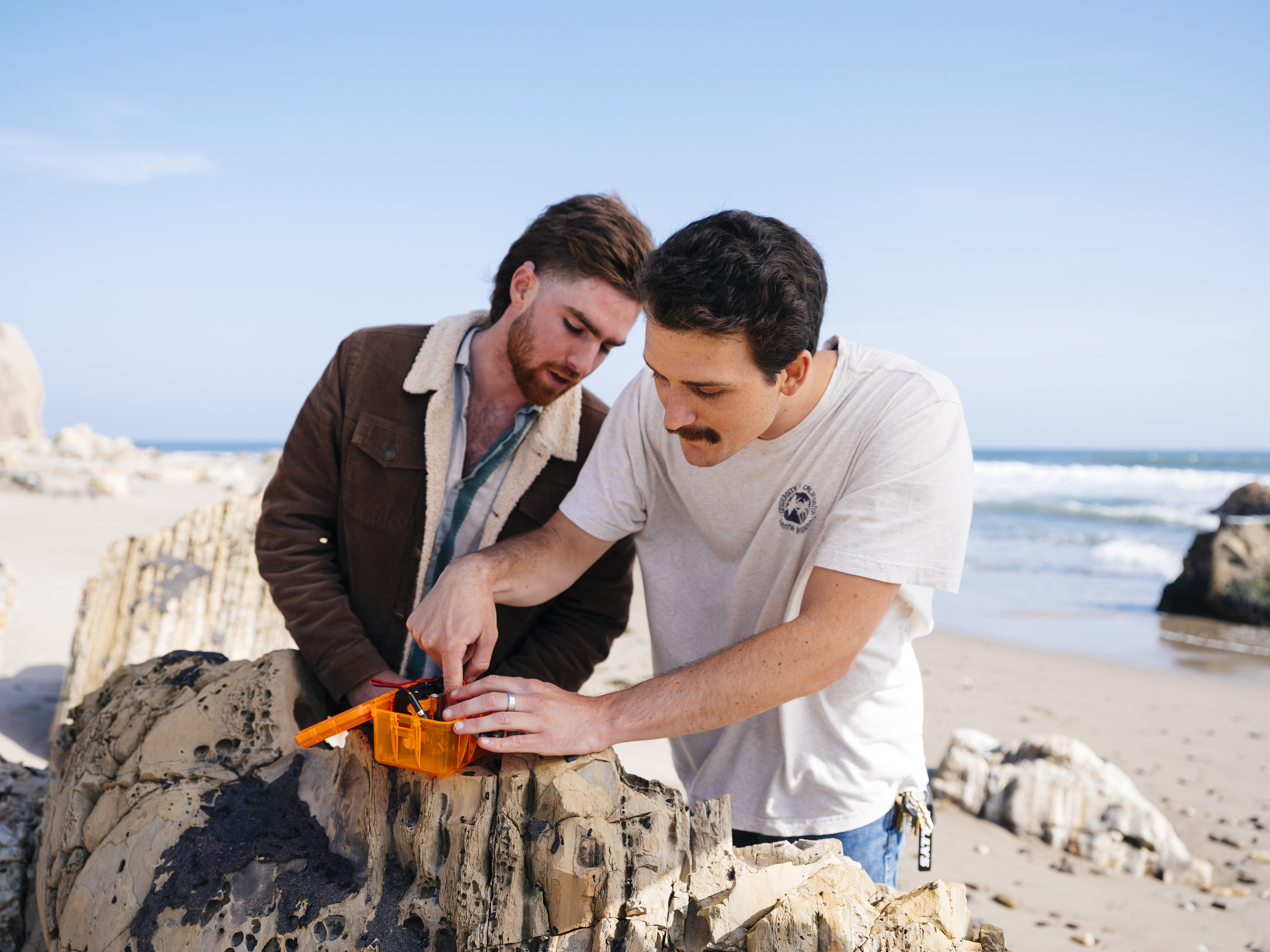
Discover exciting new topics each quarter by exploring the lists here.
Expand the lists for course descriptions and professor bios. Seminar offerings change each quarter and this list will be updated quarterly.
Contact Kate Von Der Lieth at kvonderlieth@ucsb.edu for questions or to request an enrollment code.
Fall 2026 Discovery Seminars for TRANSFER students
- Seminar Type: Transfer Discovery
- Department: Writing Program
- Instructor: Martha Webber
- Instructor Email: mwebber@ucsb.edu
- Day - Time - Room: Tuesday 10:00-10:50 in GIRV 1108
- Enroll Code: 57273
Course Description: This seminar explores upcycling and mending clothing: we’ll try practices, consider examples of creators who upcycle, and explore the environmental values behind these practices. We’ll also visit the UCSB Makerspace to learn about the equipment they have to support mending. You’ll emerge with at least one upcycled clothing item and write a reflection about it. No previous sewing experience is required and all mending materials are provided. You will need one item of clothing you want to mend or upcycle (with an optional field trip to Alpha Thrift store in Goleta outside of the scheduled seminar time to learn how to select items and fabrics well-suited for upcycling).
Bio: Martha Webber teaches a number of lower and upper-division courses for the Writing Program. She has a PhD in English with a specialization in Writing Studies from the University of Illinois at Urbana-Champaign (and even an AA in Fashion Design from LA Trade-Technical College). Her research on nonprofit organizations and literacy sponsorship has been published in Reflections: A Journal of Community-Engaged Writing and Rhetoric. Her creative writing, including short humor, has appeared in journals including Slackjaw, Bending Genres, and Graywolf Lab.
- Seminar Type: Transfer Discovery
- Department: Department of Counseling, Clinical, and School Psychology
- Instructor: Shane Jimerson
- Instructor Email: Jimerson@ucsb.edu
- Day - Time - Room: Tuesday 12:00-12:50 in ED 1203
- Enroll Code: 27029
Course Description: The central aim of this seminar is to provide students with information and insights regarding the professional domain of school psychology. School psychologists have expertise in mental health, learning, and behavior, to help youth succeed academically, socially, behaviorally, and emotionally. This seminar introduces how school psychologists partner with families, teachers, school administrators, and others to create safe, healthy, and supportive learning environments. Students are encouraged to bring their lunch and actively engage in the exploration and discussions about school psychology. Topics will include: 1) What is a school psychologist? 2) What is required to become a school psychologist? 3) How do I prepare if I want to go to graduate school in school psychology? Apply online at - https://ucsbeducation.az1.qualtrics.com/jfe/form/SV_0OKiD2D10EBEVzE
Bio: Professor Shane Jimerson is a nationally certified school psychologist, and recent President of both National and International School Psychology organizations. Dr. Jimerson has received numerous awards for his scholarship focused on understanding and promoting the social, emotional, behavioral, academic, and mental health of children. You can learn more at https://en.wikipedia.org/wiki/Shane_R._Jimerson
- Seminar Type: Transfer Discovery
- Department: Sociology
- Instructor: Elena Raymond
- Instructor Email: eraymond@ucsb.edu
- Day - Time - Room: Wednesday 2:00-2:50 in HSSB 1210
- Enroll Code: 61614
Course Description: The Transfer Student Seminar in Sociology is designed to mitigate "transfer shock" and accelerate the integration of incoming students into the Sociology major. Grounded in sociological theories of education and using an asset-based approach, the course demystifies the hidden curriculum of Tier 1 institutions, helping students to build navigational skills, social connections, and vital institutional knowledge. The seminar integrates engagement with student-led systems, institutional support, and alumni connections to facilitate the experience of transition and build professional toolkits for careers and graduate study in sociology. By combining academic planning with relationship-centered support, this seminar aims to cultivate belonging and empower transfer students' academic and professional identities.
Bio: Elena Skapoulli-Raymond is a Teaching Professor in the Department of Sociology. A member of the UCSB faculty since 2005, she has dedicated over two decades to fostering inclusive and academically rigorous learning environments for a diverse student body. She is a strong advocate for institutional belonging, committed to bridging the gap between academic expectations and students’ lived experiences. Her teaching and pedagogical work focus on supporting the academic and social transitions of underrepresented and first-generation students, with particular attention to mentorship, community-building, and student engagement. Through her courses and programmatic involvement, she seeks to create supportive spaces that empower students to navigate the university successfully and develop a strong sense of belonging.
- Seminar Type: Transfer Discovery
- Department: Spanish and Portuguese
- Instructor: Pedro Craveiro
- Instructor Email: pedrocraveiro@ucsb.edu
- Day - Time - Room: Friday 1:00-1:50 in HSSB 1206
- Enroll Code: 57299
Course Description: This seminar introduces students to Brazilian film. Through a mix of classic and contemporary movies, we will explore how cinema reflects Brazil’s history, culture, and social issues. Students will watch films, analyze visual storytelling, and engage in discussion-based activities to develop critical thinking and cultural awareness. No prior knowledge of film studies or Brazilian culture is required. By the end of the course, students will gain a deeper understanding of Brazilian society and the power of cinema to shape perspectives.
Bio: Pedro Craveiro is a Lecturer in the Department of Spanish and Portuguese at UC Santa Barbara. He has a Ph.D. in Hispanic Languages and Literatures, with a specialization in Portuguese and Brazilian studies. His research and teaching focus on Lusophone studies, and his recent work explores how Brazilian cinema reflects social inequalities, urban life, and cultural memory. He is particularly interested in how films invite new ways of thinking about Brazilian culture, history, and artistic expression.
- Seminar Type: Transfer Discovery
- Department: Chemistry and Biochemistry
- Instructor: Norbert Reich
- Instructor Email: Reich@chem.ucsb.edu
- Day - Time - Room: Thursday 11:00-11:50 in HSSB 1207
- Enroll Code: 57307
Course Description: Students will read primary literature on how science deals with controversies, how ignorance drives research, how to analyze a series of research papers and the process of identifying the next logical topics. If interested, students can participate in the SciTrek outreach which brings science inquiry into local secondary schools.
Bio: Norbert Reich is a Distinguished Professor of Biochemistry working in the field of epigenetics and drug design; he has a keen interest in improving science education at all levels from K-12 thorugh graduate school.
- Seminar Type: Transfer Discovery
- Department: EMS Program - Linguistics
- Instructor: Keith Corona
- Instructor Email: kcorona@ucsb.edu
- Day - Time - Room: Tuesday 11:00-11:50 in HSSB 1207
- Enroll Code: 57315
Course Description: This course explores traditional and contemporary earthen building materials including cob, adobe, rammed earth, straw bale, light-straw clay, wattle and daub, hempcrete, and timber-frame construction. Students will examine the historical global use of these sustainable materials and their modern applications. By examining buildings from diverse regions, participants will learn to evaluate thermal mass versus insulative properties, assess cost and labor requirements, and understand basic site planning principles including solar orientation. The course emphasizes how these time-tested materials can impact contemporary housing needs while reducing environmental impact.
Bio: Keith began teaching academic writing and ESL at the university level in 2012, following several years of living and working in Serbia. After teaching at UC San Diego, he joined UCSB in 2016. His work centers on autonomous learning, instructional design, and educational technology, with extensive experience supporting international and immigrant students from diverse linguistic backgrounds. Beyond ESL instruction, his interests include sustainable earthen materials for both building and art.
- Seminar Type: Transfer Discovery
- Department: Environmental Studies Program
- Instructor: Iris Holzer
- Instructor Email: irisholzer@ucsb.edu
- Day - Time - Room: Monday 5:00-6:50 in BREN 4316 *This seminar will meet in BREN 4316 on Monday October 5th and 12th only. This seminar has a mandatory weekend field trip on Saturday October 10th from 8:00 am - 5:00 pm
- Enroll Code: 27060
Course Description: Soils are the dynamic skin of the Earth, where a multitude of chemical, physical, and biological processes come together to support human health, agriculture, thriving ecosystems, and complex landscapes. This seminar will introduce transfer students to the diverse discipline of soil science, with a focus on viewing local soils during a Saturday field trip. Our meeting before the field trip will cover field safety, set community expectations, and provide an overview of our local Central Coast soils and their formation. Students will have opportunities to reflect on the intersections of soils with their other interests or desired career paths.
Bio: Hi everyone! My name is Iris Holzer (she/her), and I am an Assistant Teaching Professor in the Environmental Studies Program, where I specialize in soils and environmental chemistry. I’m originally from Mississippi and Missouri, but I came to California for college and got my B.A. in Geology from Scripps College. I completed my Ph.D. in Soils & Biogeochemistry at UC Davis in 2023, where I studied rock weathering in the soils of agricultural and natural systems. My primary areas of focus are elemental cycling in soils, soil formation, and enhanced rock weathering for carbon removal. I'm happiest digging or doing field work, and I'm committed to fostering supportive, safe, and engaging field experiences for students at every stage.
- Seminar Type: Transfer Discovery
- Department: MCDB
- Instructor: Brooke Gardner
- Instructor Email: brookegardner@ucsb.edu
- Day - Time - Room: Friday 3:00-3:50 in ILP 3101
- Enroll Code: 61861
Course Description: This course, meant for pre-biology transfer students, will discuss how biochemistry concepts and approaches presented in the MCDB 108A - Biochemistry of Macromolecules course are used in research on campus. In addition to reading and discussing scientific articles related to research on campus, we will discuss how to get involved in research, graduate school, and summer research opportunities.
Bio: I joined the MCDB department as an Assistant Professor in March 2019. My research uses protein biochemistry, molecular biology, and cell biology techniques to determine how cells make and maintain the peroxisome – a membrane-bound organelle required for specialized metabolism. Prior to starting at UCSB, I was a postdoctoral fellow at UC Berkeley, a graduate student at UCSF, and an undergraduate at Middlebury College in Vermont. Outside of work, I love sailing and exploring with my two daughters.
- Seminar Type: Transfer Discovery+
- Department: CCS Music Composition / Writing and Literature
- Instructor: Andrew Watts / Rebbecca Brown
- Instructor Email: aawatts@ucsb.edu, rebbecca.brown@ccs.ucsb.edu
- Day - Time - Room: Monday 2:00-3:50 in PHELP
- Enroll Code: 62992
Course Description: In this Discovery Seminar, students will create original compositions that explore the connections between sound, poetry, music, and language. Throughout the quarter, we will investigate the ways in which expressive communication in music and language can be heightened despite the presence of ambiguity and indeterminacy. We will look at manipulations to the quality of sound and language in poetry and music in order to discover how compositions can elicit a number of exciting interpretive possibilities. This course will provide an introduction to theories that explore how musicians and poets create meaning in their work, culminating in the presentation of original student compositions that engage with sound, language and signification in unique and compelling ways. Students of all disciplines are welcome!
Bio: Andrew A. Watts is a composer of chamber, symphonic, and multimedia works performed worldwide. His compositions have been featured at cultural events like Burning Man (Corpus Clock) and venues such as The Kitchen (NYC). He has been commissioned by leading new music groups including Ensemble Dal Niente, Ekmeles Vocal Ensemble, and Splinter Reeds, with support from organizations like New Music USA. Watts's music mines the ramifications of technology and the post-human, exploring extremes of freedom and restriction, purity and distortion, or the very distinction between musical signal and noise. He often incorporates invented instruments and AI-generated media, recently premiering large-scale works like AI and the Heat Death of the Universe. He holds degrees from Stanford University (DMA), Oxford University (MSt), and the New England Conservatory (BM). Watts is on the Music Composition faculty at the University of California Santa Barbara's College of Creative Studies, where he is an affiliate in the Mind & Machine Intelligence initiative and was a finalist for the Distinguished Teaching Award. He has been a featured composer at renowned international festivals, including the Darmstadt Summer Courses, MATA Festival, and impuls Academy, and has given guest lectures at institutions like IRCAM and Harvard.
Rebbecca Brown is a multi-genre artist and writer who also dances, sings, and plays the drums. Author of the novel They Become Her (What Books Press), the lyrical prose collection Mouth Trap (Arc Pair Press), and the prose chapbook Anybody Home (Gnashing Teeth Press), she has received Honorable Mention from the Academy of American Poets, the Rachel Sherwood Prize for Poetry, First Place in the LACC Writing Contest for Creative Nonfiction, and an Honorable Mention in the Starcherone Innovative Fiction Contest. Her work has appeared in American Literary Review, Confrontation, Eclipse, Quibble Lit, and Artwife (among others). She is currently the Faculty Advisor of Spectrum Literary Journal, the longest-running undergraduate literary magazine produced in the UC system, and is also a member of What Books Press, a publisher based out of Los Angeles. A former Fulbright-Nehru Visiting Lecturer at Kannur University in Kerala, India, she currently teaches in the College of Creative Studies at UC Santa Barbara. Most recently, she was honored with the 2025-2026 Distinguished Teaching Award for excellence in teaching at UCSB.
Fall 2026 Discovery Seminars for FIRST-YEAR Students
- Seminar Type: First Year Discovery
- Department: Economics
- Instructor: Dick Startz
- Instructor Email: startz@ucsb.edu
- Day - Time - Room: Wednesday 9:00-9:50 in HSSB 1206
- Enroll Code: 57240
Course Description: We explore using artificial intelligence to better understand the economy as well as the use of AI in learning economics. Students are asked to explore topics and find and analyze data using AI and to share their experiences during class. No AI or economics experience needed!
Bio: Dick Startz is Distinguished Professor of Economics at the University of California, Santa Barbara and professor emeritus at the University of Washington (where he served as department chair and as a divisional dean). Professor Startz has published empirical work on a wide range of topics as well as making a number of contributions to econometric methodology. His work in education has seen two main outlets. The first is his book, Profit of Education (Praeger 2010), which builds the economic case for higher teacher salaries. The second main outlet blogging about education at the Brookings Institution Brown Center Chalkboard and his blog www.ProfitOfEducation.org, which has been described as “Freakonomics for the economics of schooling.” The roughly 500 posts are split between original, short data-driven analyses of topics in the economics of education and reviews of research findings from the academic literature. In addition to his work on the economics of education, Professor Startz is the coauthor of a macroeconomics text which has been translated into 8 languages, several books on personal computing, and many academic journal articles. More information can be found at http://startz.weebly.com/.
- Seminar Type: First Year Discovery
- Department: History of Art & Architecture
- Instructor: Heather Badamo
- Instructor Email: badamo@ucsb.edu
- Day - Time - Room: Thursday 11:0011:50 in the Library Seminar Room 3304
- Enroll Code: 57257
Course Description: Intended for first-year students, this discovery seminar explores medieval manuscripts and manuscript fragments in Special Collections. Made from animal skins, written by hand, and painted with brilliant decoration, manuscripts provide insights into the artistic, devotional, and intellectual worlds of the Middle Ages. Over the course of the quarter, students in this course will learn how to handle manuscripts, understand their production, and interpret their decoration. We will examine a range of genres, including: Paris Bibles, Books of Hours, scientific notebooks, Qurans, and choir books. We will also consider how medieval book-making practices carried over into print—still shaping our experience of the written word today.
Bio: Heather A. Badamo is an associate professor of the History of Art & Architecture. She specializes in medieval art & architecture with a focus on the eastern Mediterranean. Her current research focuses on Christian Arabic manuscripts in medieval Egypt.
- Seminar Type: First Year Discovery
- Department: Chemical engineering
- Instructor: Todd Squires
- Instructor Email: tsquires@ucsb.edu
- Day - Time - Room: Tuesday 9:00-10:50 in 570 1200 *This seminar meet for the first 5 weeks of the quarter
- Enroll Code: 61598
- Day - Time - Room: Tuesday 1:00-2:50 in 570 1200 *This seminar meet for the first 5 weeks of the quarter
- Enroll Code: 61606
Course Description: Each of you has used shampoo and toothpaste almost every day of your life (I hope), yet have you ever stopped to think about how incredible these products are? Why does shampoo flow as slow as honey, but spread into your hair so much more easily (and less painfully)? How can hand sanitizer pump out of the bottle, but sit in a little pile on your hand until you spread it? Come learn how these products work by making your own in lab! Current plans are to do shampoo, hand sanitizer, moisturizing lotion, and lip balm.
Bio: Todd Squires has been a Professor of UCSB Chemical Engineering since 2005, and is faculty advisor for UCSB's student chapter of the Society of Cosmetic Chemists. He earned undergraduate degrees in Physics and Russian Language and Literature at UCLA in 1995, and his PhD in Physics from Harvard in 2002. His research involves "complex fluids", with applications in consumer products, the function and dysfunction of lung surfactants, and water treatment membranes. He has two kids in college and one in elementary school, which has helped him understand both how exciting -- and how stressful -- the transition to college can be.
- Seminar Type: First Year Discovery
- Department: Art
- Instructor: Kip Fulbeck
- Instructor Email: seaweed@arts.ucsb.edu
- Day - Time - Room: Tuesdays 9:00-10:50 in ARTS 1344 *This seminar will meet the first 5 weeks of the quarter
- Enroll Code: 57265
Course Description: Examining how we create our own identities gives us cheat codes for navigating the outside world. In this interactive and fun workshop, students will view work by visiting spoken word artists, performers, and filmmakers, as well as engage in lively discussions pertinent to their phase in life as new college students.
Bio: Kip Fulbeck teaches as a Distinguished Professor of Art. He has exhibited worldwide and has been featured on CNN, MTV, The New York Times, The TODAY Show, and numerous NPR programs. He is the author of six books and the recipient of UCSB's Distinguished Teaching Award and Faculty Diversity Award.
- Seminar Type: First Year Discovery
- Department: Theater and Dance
- Instructor: William Davies King
- Instructor Email: w_d_king@ucsb.edu
- Day - Time - Room: Tuesday 5:00-5:50 in TD-W 2517
- Enroll Code: 26591
Course Description: Study of diverse aspects of personal collecting: its psychology, history, sociology, economics, and artistic application. How does personal collecting differ from and sometimes intersect with institutional collecting? How does personal collecting function as a dimension of one’s life story? How does one’s life story relate to the material values of American society and culture? How does collecting differ from hoarding or maximalism? How is collecting—and ownership, more generally—developing in the present moment? Using readings, demonstrations, and practical exercises, the course will look at these questions.
Bio: William Davies King recently retired from his career as a professor of theater history, but he continues to teach from his lifelong passion for collecting. He is the author of Collections of Nothing (U. of Chicago Press, 2008), which is part essay, part memoir about his life as a collector. He has a new book forthcoming in 2027, which grew directly out of the teaching of this seminar: (working title) Having Had: Thinking Through Collecting at an Endpoint.
- Seminar Type: First Year Discovery
- Department: Center for Innovative Teaching, Research, and Learning
- Instructor: Nathan Emery
- Instructor Email: nemery@ucsb.edu
- Day - Time - Room: Tuesdays 11:00-11:50 in HSSB 1228
- Enroll Code: 62489
Course Description: A critical component of science is how you approach and think about concepts and problems. In this course, students will explore many ways of thinking that are practiced by scientists from across STEM disciplines. The frameworks and mindsets that we cover will help students learn scientific concepts and skills in current and future courses. Additionally, this course seeks to help students be prepared for interacting in a world full of data and scientific information.
Bio: Nathan Emery, is the Associate Director of STEM Education in CITRAL and has a PhD from the EEMB department. He has expertise in Biology Education and Plant Ecology. He has taught several courses at UCSB in the past and enjoys working with students on how the process of science works.
- Seminar Type: First Year Discovery
- Department: Computer Science
- Instructor: Maryam Majedi
- Instructor Email: majedi@ucsb.edu
- Day - Time - Room: Tuesday 5:00-5:50 in ILP 4211
- Enroll Code: 26625
Course Description: As students begin their journey in STEM fields, it's essential to recognize that technical skills alone are not enough. This course introduces first-year students to the ethical complexities embedded in scientific and technological endeavors. Students will explore how some designs and innovations can inadvertently impact society, perpetuate biases, and lead to unintended consequences if ethical considerations are overlooked.
Through interactive discussions, case studies, and real-world examples, students will learn to identify and address ethical challenges such as privacy violations, discrimination, and inequality in technical design. This course encourages students to think critically about their roles as future engineers, scientists, and technologists, highlighting the importance of responsible decision-making that promotes inclusivity and fairness.
Bio: Dr. Maryam Majedi joined the Department of Computer Science at the University of California, Santa Barbara, as an Assistant Teaching Professor in 2023. She completed a teaching stream postdoc at the University of Toronto, where she worked with the Embedded Ethics Education Initiative (E3I) team and introduced the first ethics modules for CS courses in Canada.
Dr. Majedi earned her Ph.D. in Data Privacy at the University of Calgary. Her Ph.D. work presents a novel privacy policy modeling technique. Prior to her Ph.D., she earned a Master of Science degree in High-Performance Scientific Computing from the University of New Brunswick. Dr. Majedi also completed a fellowship in Medical Innovation at Western University.
Dr. Majedi's research primarily revolves around Embedded Ethics and Data Privacy. She explores the intersection of computer science and ethical considerations, aiming to develop modules that facilitate the integration of ethics and data privacy principles into computer science education.